


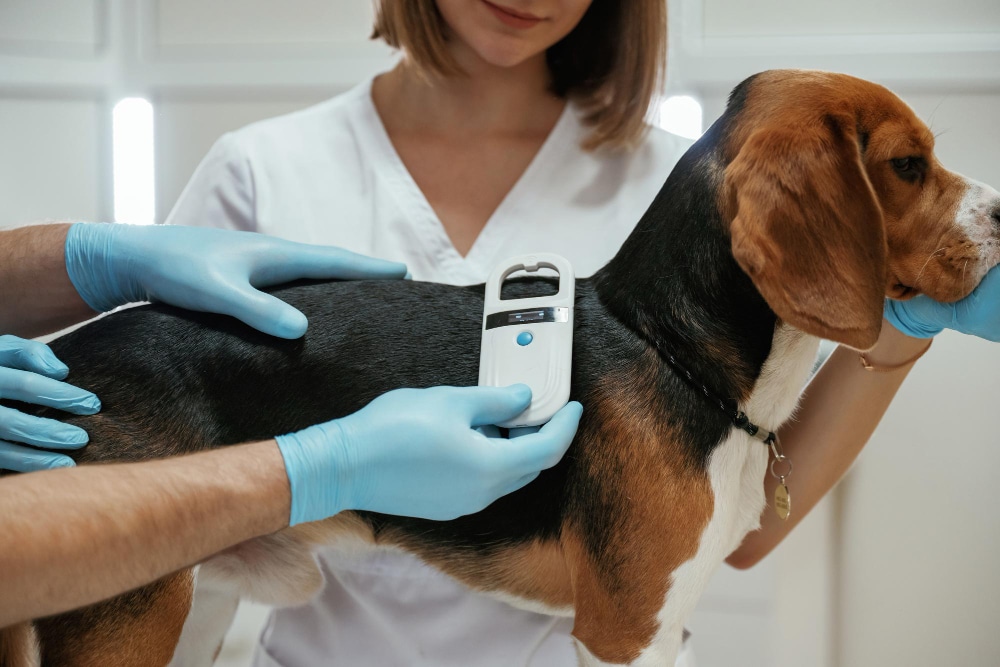
If you’re planning to move overseas with your pet, there’s one small but critical step you’ll need to tick off before anything else and that is the microchip. This tiny identification device that can make all the difference when it comes to your pet’s safety and compliance with travel regulations. While collars and tags can break or fall off, a microchip stays with your pet for life. Most countries won’t allow entry without it, so if you’re planning to relocate this is definitely something to organise well in advance.
The chip itself is tiny (generally about the size of a grain of rice) and is implanted just under the skin between your pet’s shoulder blades. Once it’s there, it holds a unique identification number that can be read by a scanner. That number links back to a registry containing your contact details, medical records and other important info about your pet. It’s a simple yet powerful way to ensure your pet can always be identified, whether they’re lost or just going through airport customs.
How Microchips Work Behind the Scenes
When scanned, a microchip sends out a signal using something called RFID, or radio frequency identification. The chip doesn’t require a battery or any kind of power source as it only becomes active when scanned, which is why it doesn’t interfere with your pet’s daily life. It doesn’t track your pet’s location like GPS. Instead, it acts like a digital ID card that’s always with them.
Each chip contains a unique 15-digit number, and that number is stored in an international database and corresponds to your pet’s registration details. If your dog or cat is ever lost, a vet can scan the chip and quickly locate your contact information. What’s especially important for travel is that customs and animal import officers use that chip to verify all the documents that accompany your pet. Everything from vaccination dates, health certificates and test results will be checked against that microchip number. If the number doesn’t match or can’t be scanned, your pet might be denied entry at the border.
There’s also a specific frequency standard to be aware of. Most countries require a microchip that operates at 134.2 kHz, which aligns with ISO 11784 and 11785 standards. This ensures compatibility with international scanners. Not all microchips meet this requirement, so it’s crucial to check that your vet is using the correct type before travel arrangements begin.
The Implantation Process
Getting your pet microchipped is a fast, low stress procedure that’s typically done during a standard vet visit. The chip comes preloaded in a sterile applicator and is injected under the skin with a large-bore needle and it’s about as quick as a vaccination, with your pet hardly notice it.
Before the chip goes in, your vet will scan it to make sure the ID number matches the packaging. After insertion, they’ll scan it again to confirm it’s reading properly. Once confirmed, they’ll provide you with the paperwork needed to register the chip with an appropriate national database.
While the chip itself is permanent, the registration isn’t something you can forget about. It’s your responsibility to keep the contact details up to date, especially if you move house, change phone numbers or transfer pet ownership. Unregistered microchips are effectively useless since there’s no way to trace them to an owner.
Why Registration and Accuracy Are Essential
Once your pet is microchipped, you’ll need to register the ID number with a recognised registry. Without this step, the chip doesn’t serve its main purpose. Your vet can often handle the registration for you, or at least guide you through the process. Some databases are local, while others are international and many allow online updates for convenience.
One of the main reasons registration is so important for travel is the sheer volume of documentation involved. Health certificates, rabies vaccinations and blood tests, all of these documents will reference your pet’s microchip number. And every time a vet prepares paperwork for international travel, they’ll scan your pet and enter that number into the forms. If anything is mismatched or missing, it can delay or even derail your plans.
Microchipping and International Travel
So when preparing your pet for a big move overseas, the microchip sets the foundation for everything that follows. Vets, customs officers and animal health departments all rely on that tiny chip to confirm your pet’s identity and health status. Because without it, the entire relocation process becomes uncertain.
Although the chip itself is small, the role it plays is huge as it connects your pet to your contact information, their medical records, and all the essential documents needed for safe and legal travel. From the very first vet appointment to the moment they touch down in a new country, it’s the one consistent reference point that every authority will use. For expert help navigating the microchipping process and all other pet relocation requirements, we’re always here to help.
We can handle everything from pre-travel vet checks to destination specific paperwork, making sure everything’s in place, so you and your pet can start your next chapter with peace of mind.